
By Claire McDonnell Liu, Nutritionist at Leafie.org
Could the United States be heading for a new era of health?
Putting political affiliations aside, Donald Trump’s selection for high-profile health and food administration roles has enlivened hope across the political spectrum of much-needed radical policy reform.
Robert F Kennedy Junior as Trump’s pick for health secretary – the equivalent of Australia’s federal health minister – caused a stir within the US, and internationally. Kennedy says his goal is to “Make America healthy again,” a noteworthy aim given the monumental health crisis facing the states, with only 12% of American adults metabolically healthy and life expectancy declining dramatically.
Much of what Kennedy espouses on critical health topics has galvanized public support, partly due to a distinct departure from the status quo public health messaging that has failed to make inroads into the rising toll of obesity, diabetes, and heart disease marring the US.
Reforming The Dietary Guidelines for Americans
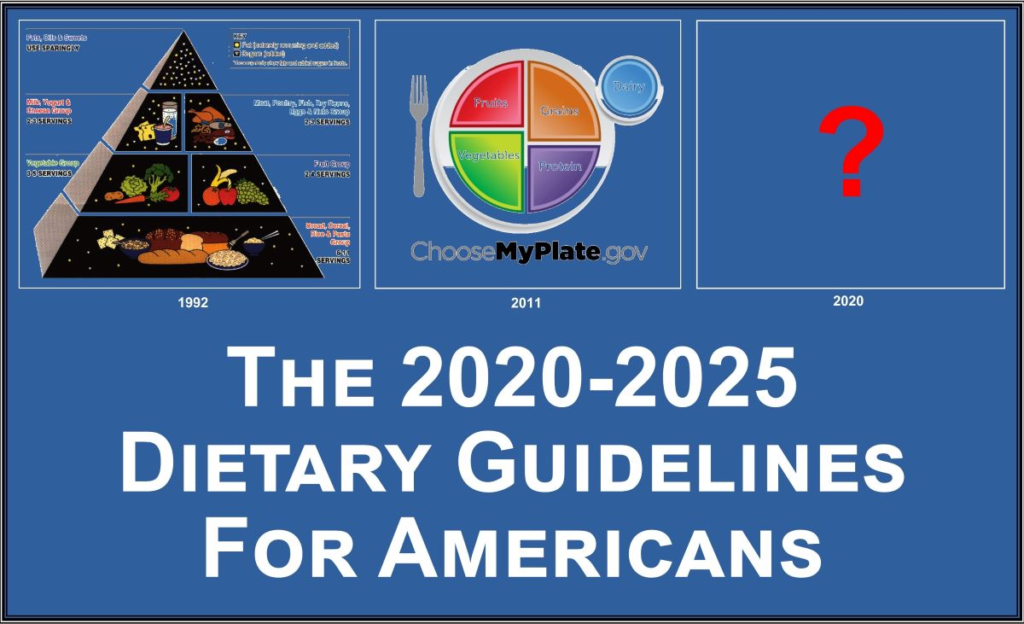
The Dietary Guidelines for Americans (DGA) represent a unique and powerful opportunity to leverage meaningful health reform in the US, and in turn, influence pivotal nutrition policy and practices worldwide.
The Dietary Guidelines govern America’s eating habits, shaping federal nutrition programs, including school lunches, food stamps, meals for seniors, hospitals and the military, food labels, and health claims. In short, they heavily impact the US food supply and ideas of healthy eating.
The Guidelines, issued every five years by the U.S. Departments of Health and Human Services and Agriculture, are intended to guide all aspects of nutrition in the US, to promote good health, prevent chronic disease, and help Americans maintain a healthy weight. Yet the DGA have failed to tackle obesity, type 2 diabetes, and other major nutrition-related diseases.
Nina Teicholz, presenting ‘Dietary Guidelines & Scientific Evidence’ 2019
Many nutrition experts have pointed out serious flaws in the influential dietary guidelines. Nina Teicholz, a leading nutrition science researcher, author and founder of The Nutrition Coalition, has criticized the guidelines, saying that “… our nation’s top nutrition policy is not based in sound science.”
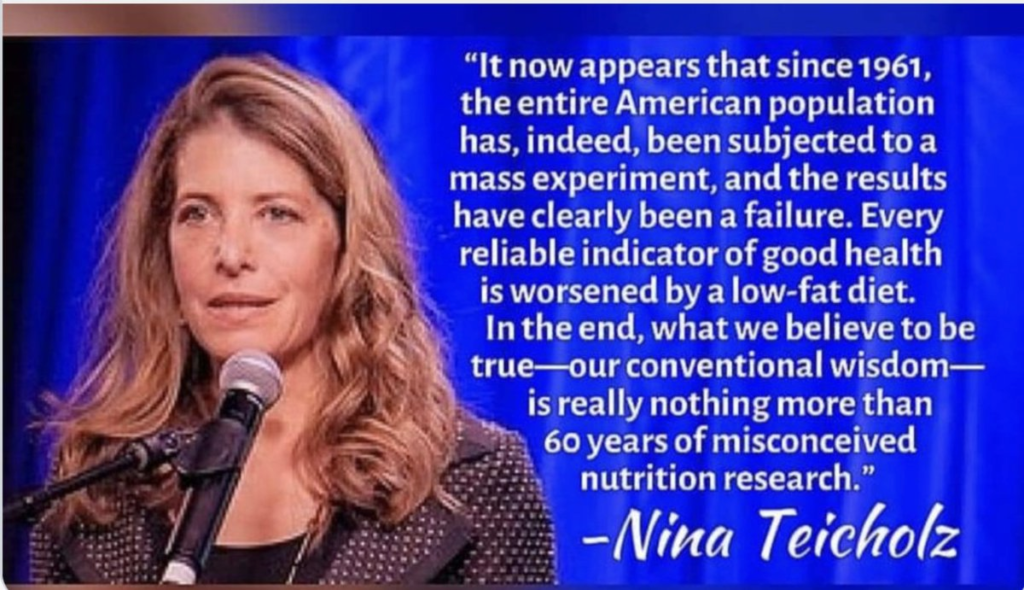
A National Academies of Sciences Report for Congress in 2017 found that the “scientific rigor” required improvement, identifying that “biases and conflicts of interest” must be managed to create “trustworthy” guidelines.
Conflicts of interest have indeed hurt the guidelines’ credibility. A 2022 study found over 700 ties between the 2020 DGA committee and companies like Kellogg, Kraft, and General Mills. Raising concerns that industry influence is shaping advice for families already facing chronic diseases.
Previous iterations of the guidelines excluded evidence on crucial public health topics, including the efficacy of nutritional therapies, such as a low-carb diet, for reversing chronic diseases and obesity; saturated fat from natural whole foods affecting heart disease risk; eating a high-carbohydrate diet when the majority are insulin sensitive; choosing seed oils over whole natural fats; or reducing red meats to reduce disease risk.
Nina Teicholz, presenting ‘U.S. Dietary Guidelines for Americans 2020 Update’
Radical Health Reform
Could the upcoming 2025-2030 Dietary Guidelines provide a pivotal opportunity to reform nutrition policy, and the health of the US nation?
Teicholz, who Low Carb Down Under have had the privilege of hosting at our conferences and on the Low Carb Down Under channel, recently announced on the X platform that,
“Someone has nominated me to reform the US Dietary Guidelines for Americans. I have dedicated the last 10 years of my life to this issue, and it would be an enormous honor to serve.”
With a PhD in Nutrition Science, extensive nutrition science and policy research background, specializing in rigorous investigations into the dietary guidelines, it’s hard to imagine anyone better qualified, or more dedicated, to enacting meaningful reform of the DGA.
Teicholz’s nomination on the ‘Nominees for the People’ platform, run by
Kennedy campaign volunteers can be voted for here.
Changing Course
Nina Teicholz, presenting ‘Why Nutrition Advice is So Wrong’ for LCDU 2023.
The DGAs have failed to protect Americans’ health, leading to rising chronic diseases. The 2025-2030 Dietary Guidelines review process could provide an immense opportunity to realize meaningful nutrition policy change, given the right team drives the process.
It’s time to restore transparency and trust in dietary guidelines and focus on reversing diet-related chronic diseases in the U.S. and worldwide.
Nina Teicholz is uniquely qualified to take a critical evidence-based view of the US Dietary Guidelines. “Whatever your views on the election, now is the time to reverse chronic disease in America. We have a chance” said Teicholz.


Leave a Reply