
By Claire McDonnell Liu, Nutritionist at Leafie.org
Could a Ketogenic Diet help in the treatment of mental ill-health?
There is a vigorous evidence base that demonstrates the efficacy of Ketogenic diets in the treatment of epilepsy, as well as developing research into the effectiveness of the diet in the treatment of additional neurological conditions, such as Parkinson’s Disease, Traumatic Brain Injury, and Multiple Sclerosis.
In recent years interest has gained pace in the potential benefits of the Keto diet approach for psychiatric conditions.
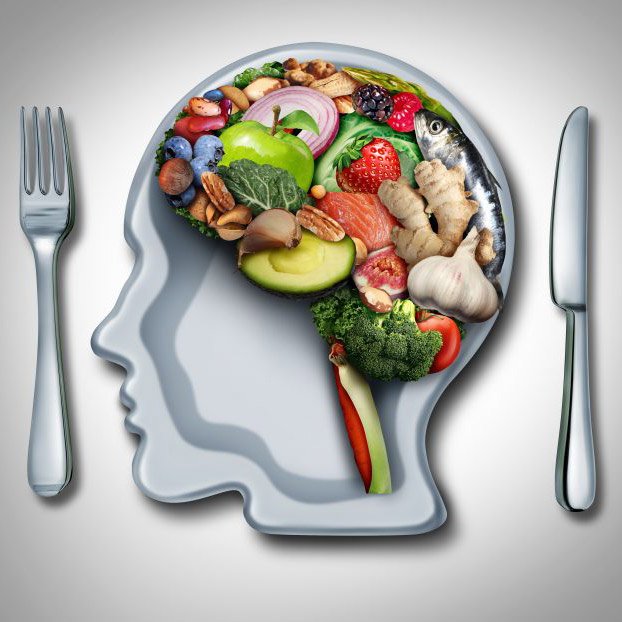
Keto Diet Mental Health Research
A team of researchers, led by Neuroscientist Professor Sarnyai, at James Cook University (JCU) in Australia, is undertaking clinical trials to assess the impact of carbohydrate-restricted diet interventions for the treatment of patients with schizophrenia and bipolar disorder.
The JCU Ketogenic Diet clinical trials are focused on a whole-food nutrition approach, typically aiming for a macronutrient breakdown of 75% fat, 20% protein, and 5% carbs per day. Professor Zoltan Sarnyai explained “The focus is on foods like eggs, meats, dairy, healthy fats such as avocado, nuts, salmon, and low-carb vegetables and fruits, as well as sugar-free drinks. It restricts highly processed items and unhealthy fats”.
Associate Professor Carlo Longhitano, Head of Psychiatry at JCU and co-investigator in the study stated that “The way ketogenic therapy works is to provide alternative energy sources in the form of so-called ketone bodies (products of fat breakdown) and by helping to circumvent abnormally functioning cellular energy pathways in these mental disorders”.
These latest studies build on earlier research and trials, including a study conducted of thirty-one inpatients in Toulouse, France. The inpatients were limited to a maximum of 20 grams of carbohydrates per day. Leading researcher, Psychiatrist Dr. Albert Danan, found that a whole-food ketogenic diet was safe, feasible, and associated with “unprecedented improvements in mental and physical health in hospitalized patients with serious mental illness”.
Dr. Georgia Ede – ‘Nutritional and Metabolic Strategies for Optimizing Mental Health’
In her ‘Nutritional and Metabolic Strategies for Optimizing Mental Health’ presentation Dr. Georgia Ede MD, shares the significant role of nutrition in regulated brain function, and details the promising early studies into ketogenic diet therapies for mental health patients that are laying the groundwork for further research. “It stands to reason that an intervention that been shown to be safe and effective in the treatment neurological conditions would also be prudent to apply to the treatment of psychiatric conditions. And in my opinion, the science is already here, it’s just the clinical trials of psychiatric disorders, specific psychiatric conditions that need to catch up”.
Baszucki Brain Research Fund
The James Cook University clinical trials, along with four additional international research teams, are funded by a grant from the philanthropic Baszucki Brain Research Fund. The awardee clinical research teams are from James Cook University; The Ohio State University; Standford University; University of California, San Francisco; and the University of Edinburgh.
The clinical research teams will conduct trials of ketogenic metabolic interventions for patients with mental health conditions, including depression, bipolar, and schizophrenia. Research scientist and Baszucki Brain Research Fund awardee Jeff Volek, PhD, RD stated that “This grant is instrumental in allowing us to extend our work into potential benefits on mental health, specifically the application of these therapies for managing major depression in college-aged adults.”
Metabolic Health Benefits

Those suffering from mental illnesses, particularly with severe conditions, are more likely to suffer from physical comorbidities, predominantly cardiovascular diseases (CVDs) but also related health conditions of obesity, stroke, type two diabetes, and hypertension (Penninx et al. 1918). The “high rates of physical comorbidities (and typically-poor clinical management of this) drastically reduces life expectancy” (Walker et al. 2015), with studies showing that people with mental ill health tend to die earlier than the general population. A meta-analysis of worldwide research estimated that people with mental illnesses have between 1.4 and 32 years of potential lost life, with a median of 10 years life lost (Walker et al. 2015). There is also evidence that this reduction in life expectancy is increasing, in fact, growing research shows that the “years of life lost due to physical health conditions in people with mental illness is actually increasing over time” (Firth et a 2019).
Dr. Chris Palmer – ‘The Ketogenic Diet in Neurology and Psychiatry’
Dr. Chris Palmer MD, Assistant Professor of Psychiatry at Harvard Medical School, shares how he has pioneered the use of the ketogenic diet in psychiatry in his presentation ‘The Ketogenic Diet in Neurology and Psychiatry’. Dr. Palmer actively undertakes research into the use of ketogenic diets as therapy for patients, citing the importance of metabolic health interventions for patients with mental health conditions “metabolic health disturbances in the brain of people with mental health disorders is well known” and a “ketogenic diet has been found to reverse many of the metabolic and brain abnormalities found in people with mental disorders”
Professor Jeff Volek PHD, RD, shared that the Ohio University research team has “focused on the formulation and implementation of carbohydrate-restricted ketogenic therapies, which we have demonstrated can have a transformative effect on people’s metabolic health and wellbeing”.
Professor Volek is the Co-Founder and former Chief Science Officer of Virta Health, a clinically-proven treatment to safely and sustainably improve metabolic health conditions. In an earlier talk for Low Carb Down Under Volek explains the science behind ketogenic diets and their potential for significantly improving patients’ physical health outcomes.
‘The Art and Science of Low Carb Living: Cardio-Metabolic Benefits and Beyond’
In Summary
The current trials into ketogenic diet therapy represent an exciting time in mental health research and potentially the future development of infrastructure and support around nutritional therapies for patients.


penny figtree
fantastic summary! thank you!
penny figtree
fantastic outline of latest developments! thank you!
Georgia Whiley
This is wonderful news! My 24 yo son has been diagnosed with schizophrenia. He is currently in hospital and being treated with anti-psychotic meds.
Are there any psychiatrists in Australia (we are in Northern NSW) who are using keto (combined with medication) to treat schizophrenia?
Mez Fisher
Hi Georgia, did you ever find any psychiatrist open to this? I’m in northern NSW too. I want someone to create a keto therapy residential program… a recovery facility. A farm, or similar. Anyone out there able to do this? Please, we need to transform mental health delivery in Australia.
Julene
Did you ever get s reply to your question?
Roobyn Torney
Question: Can a client be eligible to work with your team if they are strict vegans?
The patient I will describe below has had severe allergies & food intolerances since birth . She therefore has always eaten a restricted diet. She is also an ex-elite athlete who has a lean strong body.
She has a bipolar diagnosis and has developed psychosis requiring 4 ‘enforced’ hospitalisations over the past 10 years.
Her psychiatric team finally figured out the most effective medication in the optimal (minimal) dosage for her.
She accepts her diagnosis, and, in the past 2 years has accepted that the medication, though imperfect, has allowed her to reengage in her life as a high functioning professional and to sustain her marriage.
However,,she has always wanted to explore alternative approaches, all of which, other than antipsychotic medication, have resulted in catastrophic ‘fallout’ for her and our family.
I am interested to learn about your trial “managing” ketogenic diet, being tailored to each patient’s needs.
Your research gives me hope that there is a more empowering treatment approach with less side effects .
To conclude:
Is a psychiatrist- monitored ketogenic diet possible for a patient with an already restricted diet & who is a committed VEGAN? ( no eggs, dairy, fish, chicken, red meat)
( would ‘non negotiable’ protein sourced from lentils and pulses contain too many carbs ? and preclude entering ketosis??)
Kind regards
Robyn Torney
Laura
I have been researching Keto/ketovore since June 2022 after a fall from a seizure started in 2005 after a TBI through DV. I wanted to start a Keto diet but was started on a low carb diet through a Naturopath Sheridan Genrich which I did at the end of 22 with no change. After 3 months & a lot of $$$ spent on consultations & buying vitamins from her I decided to stop her diet. After 8 months of my own research I stopped all the vitamins along with the powdered protein & a few other things like doubling my veggie intake which was recommended. in Jan 23 I stopped all fruit & veg & kept on with my own research as I had already stopped sugar, alcohol & caffeine in June 22. I did ketovore until Sept 23 when I decided to add a few low oxalate veg’s. The seizures are down to half & I have had none for 6 wks. I finally contacted the Charlie Foundation & have had a few consultations with a Dietician.
Laura
Please take the time and and do your own research & listen to all the wonderful doctors like Chris Palmer, Dominic D’Agostino, Georgia Ede, Sally Norton, Anthony Chaffee, Ken Berry, Elizabeth Bright. There are so many amazing doctors & Dieticians getting together to do the right thing for their patients. There is so much info out there that you don’t need to pay for on their sites to give you the information you need. Every time I listen to a new talk by these Drs I pick up something new I had missed. It is good in the end to work with a Dr or Dietician but good to understand it yourself before starting.
Katherine
Are there any clinical trials on KETO FOR SCHIZOPHRENIA that I can be part of…thanks.
Mick
I am legally totally and permanently disabled from devastating PTSD & treatment resistant major depression. I was hospitalised multiple times for up to 3 months at a time, had over 50 ECT treatments, literally every antidepressant / antipsychotic, experimental drugs etc. Nothing helped. I previously worked all over the world as a geophysicist but literally could not tie my own shoe laces. I desperately wanted to kill myself every day for years.
I started fasting and my world changed. That progress accelerated when I went keto and hen carnivore and added resistance training (which would have been impossible previously as I barely got out of bed for years).
I’m now back at work and after a gradual increase I’m CEO of a tech company.