
Why the Flipped USA Food Pyramid Matters to Australians
By Claire McDonnell, Nutrition Researcher
Big news for anyone who cooks, eats, or cares about family health: the U.S. has released its 2025–2030 Dietary Guidelines, and the message is clear: real, whole foods are back on the menu.
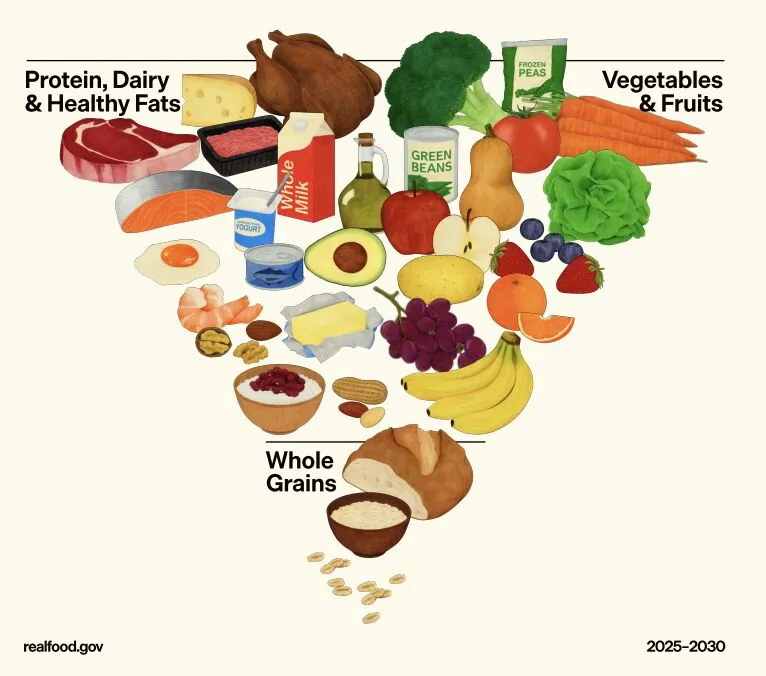
Here’s what’s changed:
- More protein, from both animal and plant sources
- Healthy fats are encouraged as part of a balanced diet
- Fruits and vegetables remain essential
- Whole, intact grains instead of refined ones
- Reduced ultra-processed foods, sugary snacks, and drinks
- Recognition of low-carb diets for people managing chronic disease
This isn’t just policy talk. It changes what’s on the plate at home, at school, and in care facilities. Breakfast, lunch, dinner, and snacks now lean toward real, nutrient-dense food, making it easier to fuel children and adults alike for growth, learning, and energy. Junk food and highly processed snacks move further down the list.

How this helps health long-term
Most adults today are metabolically unhealthy, living with chronic health conditions, including insulin resistance, obesity, diabetes, high blood pressure, or fatty liver disease. The new guidelines provide practical ways to prevent or even reverse health problems.
Low-Carb Diet finally recognised

The Low Carb Down Under community has advocated for low-carb dietary approaches for improved metabolic health for well over a decade. The new U.S. guidelines now explicitly acknowledge that people with chronic disease may benefit from reducing carbohydrate intake. A clear validation of the health improvements and metabolic reality that clinicians and families have experienced.
This is a win for parents, caregivers, and individuals who want to take control of their health through food, not only medications.
Why Australia should celebrate and act

Our own Australian Dietary Guidelines are under review. The U.S. update shows that real change is possible, and that policy can finally reflect current science. For LCDU, this is the culmination of years of advocacy, demonstrating that families can thrive when food policy aligns with evidence.
It’s now Australia’s turn to shape a better, healthier future. Prioritising family meals that are satisfying, nutrient-rich, and health-promoting, school lunches that fuel learning, and care facility meals that truly support wellbeing. That’s future will be more within reach with nutrition guidelines that reflect the USA’s updated policy.
The U.S. has flipped the script on decades of low-fat, grain-heavy advice. Saturated fats in whole foods are back in, ultra-processed foods are on the way out, and low-carb options are recognised as legitimate and effective.
At Low Carb Down Under, we see this as a victory for families everywhere. It’s a call to action for Australian policy-makers to fast-track overdue nutrition guidelines changes, that align with the science to support real food, protein, healthy fats, and low-carb eating in homes, schools, and communities.
The bottom line: real food is back on the plate in the USA. Low Carb Down Under and the Australasian Metabolic Health Society will strongly advocate for significant changes in nutrition policy here, so that Australian families also benefit from science-backed guidance to build healthier generations.
References
U.S. Departments of Health and Human Services & Agriculture. Scientific Report of the 2025–2030 Dietary Guidelines for Americans. PDF
Feinman RD, et al. Dietary carbohydrate restriction as the first approach in diabetes management. Nutrition. 2015;31(1):1–13.
Monteiro CA, et al. Ultra-processed foods, diet quality and health outcomes. Public Health Nutr. 2019;22(1):1–12.


Leave a Reply